How to Read Wind for Kitesurfing
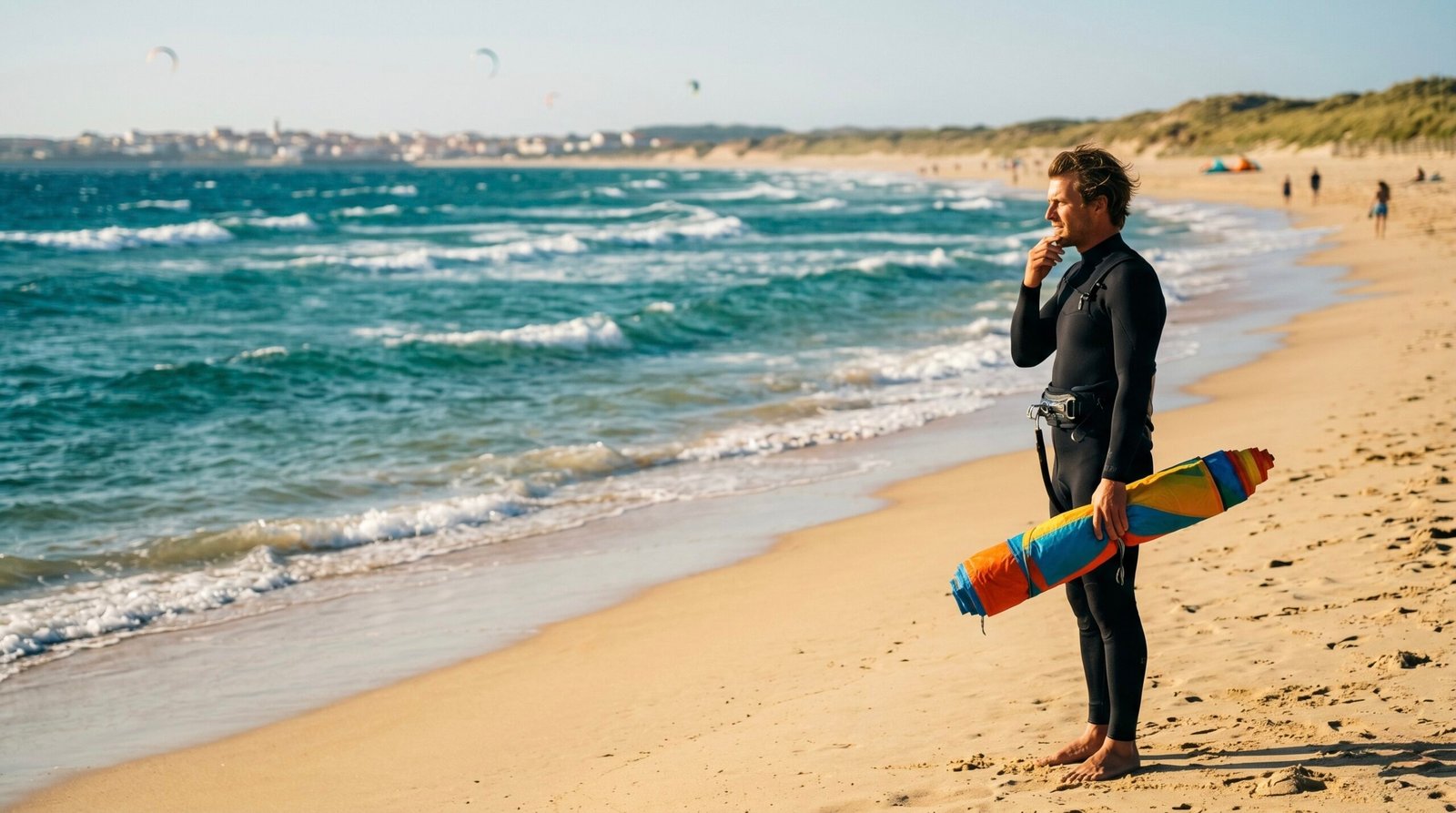
Standing on the beach, staring at the water, and trying to figure out if it is safe to pump up your kite can feel like decoding a foreign language. But learning how to read wind for kitesurfing is the ultimate superpower that takes you from a nervous student to a confident, independent rider.
Wind Reading Blueprint
By understanding the wind direction, the forecast, and the physical signs around you, you can stay safe and maximize your time on the water. Here is everything you need to know to read the wind like a seasoned pro.
The Three Crucial Wind Directions Explained
Before you even think about unrolling your lines, you need to know which way the wind is blowing relative to the shore. Wind direction is the single most important factor in deciding whether a spot is safe to ride.
- Sideshore (The Holy Grail): The wind blows perfectly parallel to the beach. This is the absolute safest direction for all levels. If you lose your board or drift downwind, you can easily ride back or body drag to safety along the coastline.
- Side-Onshore (The Safest Option): The wind blows at a diagonal angle toward the beach. This is highly recommended for beginners because it naturally pushes you and your gear back to the sandy shore if anything goes wrong.
- Onshore (Use Caution): The wind blows straight from the water onto the sand. While it keeps you from drifting out to sea, it makes launching very risky because a sudden gust can drag you onto the dry beach, trees, or rocks.
Offshore (Strictly Avoid): The wind blows from the land out to sea. It creates beautiful, flat water, but it is incredibly dangerous. If you drop your kite or get tired, you will be pushed into the deep ocean. Only ride offshore if you are an expert and have dedicated rescue boats active on the water.
Decoding the Wind Window: Your Visual Power Map
To safely pilot a kite, you must visualize the wind window. Think of the wind window as a giant, three-dimensional dome around you, with you standing right in the center and your back strictly to the wind.
The edge of this dome is your neutral zone, often referred to like numbers on a clock. When your kite is at 12 o'clock (directly above you), 9 o'clock (on the left), or 3 o'clock (on the right), it has minimal power. This is where you launch, land, and walk with your kite.
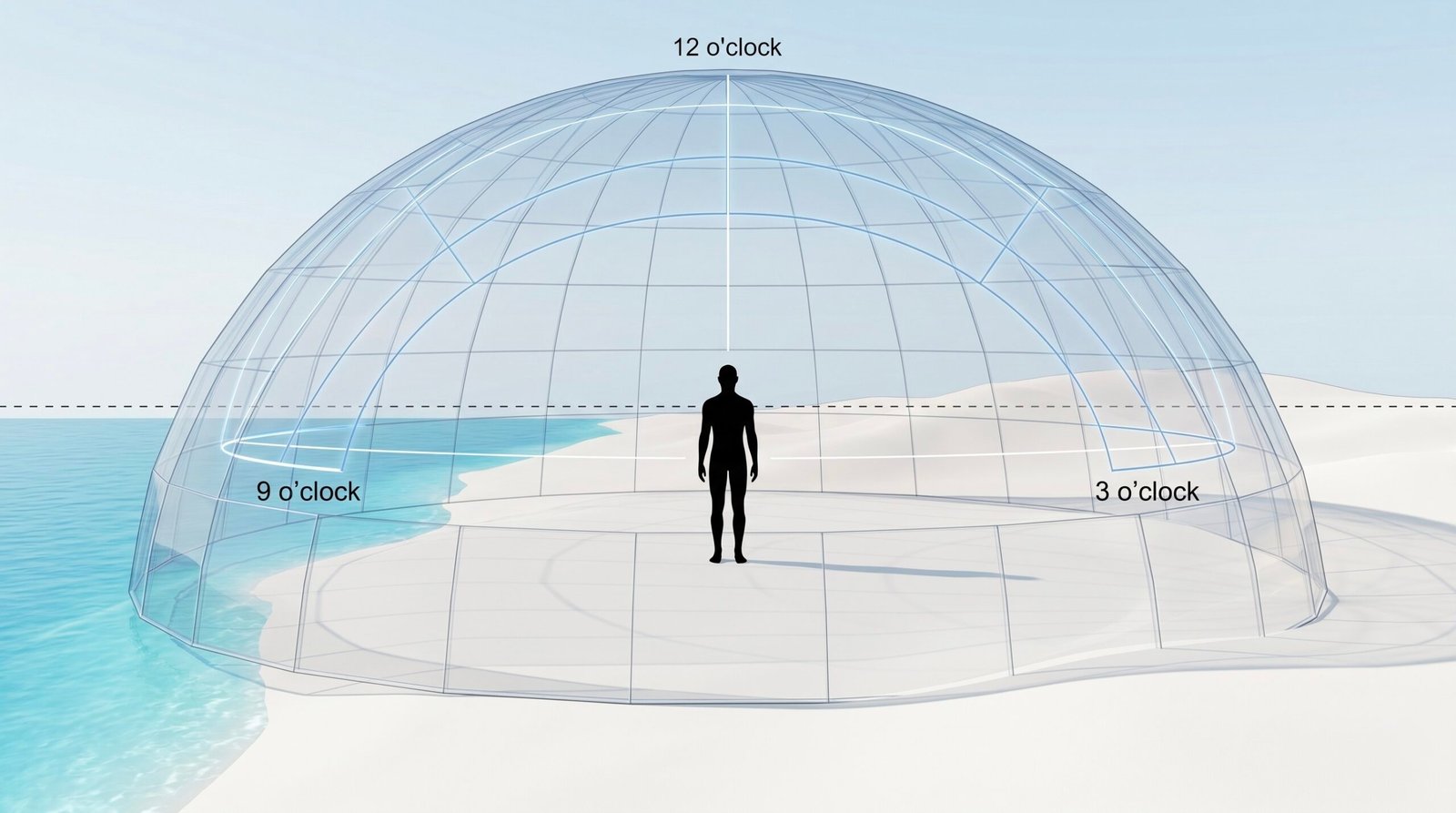
The geometric matrix — navigating the neutral edges of the 3D dome boundaries coordinates launching lines while keeping the power core centered downwind.
The center of the dome, directly downwind of you, is the power zone. Flying your kite straight through this area generates maximum pull. As a beginner, you want to avoid steering your kite deep into the power zone on land to prevent getting pulled off your feet.
How to Check a Wind Forecast for Kitesurfing
Reading a digital forecast is essential for planning your sessions. Apps like Windy, Windfinder, and Windguru are the gold standards for kiters. When analyzing a forecast, focus on these three main metrics:
- Average Wind Speed: This is the baseline wind strength, usually measured in knots. For most beginners, a comfortable sweet spot to practice is between 12 and 22 knots.
- The Gust Factor: Always check the gust speed, not just the average. If the average wind is 15 knots but it is gusting to 30 knots, the conditions will be incredibly punchy, unstable, and dangerous for learning.
- Wind Direction Arrow: Look closely at the compass arrows on the app. Ensure the forecast matches the physical orientation of your local beach so you do not accidentally show up to an offshore wind.
🛒 Shop the essentials
Everything on this checklist, ready to browse on Amazon.
Real-Life Visual Cues: Reading the Beach
Even the best digital forecasts can be wrong due to local thermal effects. Before you set up your gear, spend ten minutes observing the actual beach environment.
First, look for whitecaps (white foam) on the water. These typically start to form around 11 to 12 knots, which is the baseline sign that there is enough wind to ride. Next, watch the local flags, trees, or sand drifts to verify the wind direction.
Look at the other kiters on the water. If they are riding small kites (like a 7-meter or 9-meter) and flying fast, the wind is strong; if they are on 12-meter or 14-meter kites and struggling to stay upwind, it is on the lighter side.
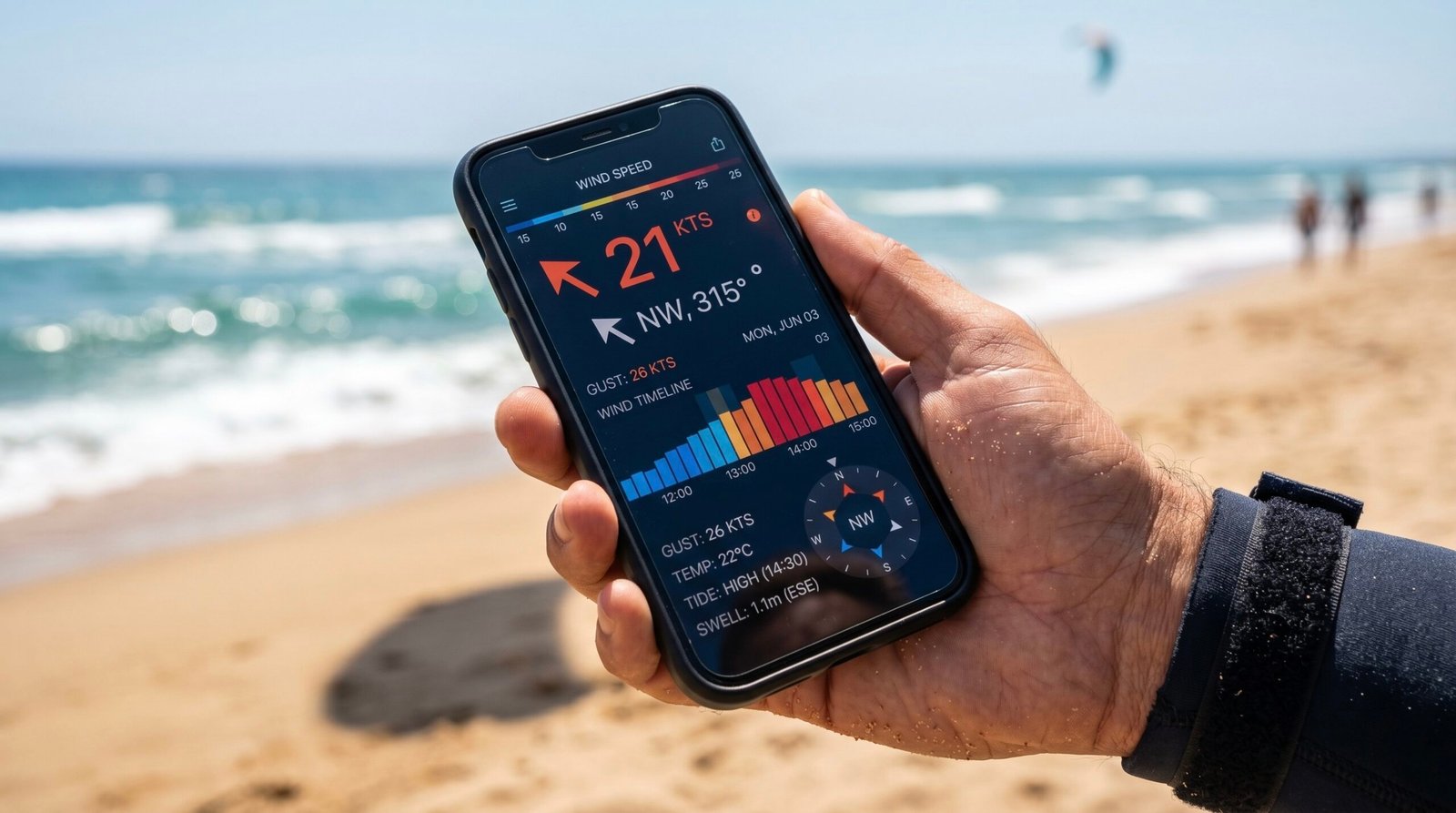
Digital correlation — validating app indicators directly against real-time beach dynamics safeguards tracking parameters before launching lines.
Learning how to read wind for kitesurfing is the foundation of becoming a self-sufficient rider who makes smart, safe decisions on the beach.
Respect the offshore warnings, watch the water for whitecaps, and get ready to enjoy the most empowering sport on the water!
Ready to trace the wind channels? Visit Kitescanner's spot hub to explore real-time velocity metrics mapped across premium global lagoons.
Check Spot Forecasts →