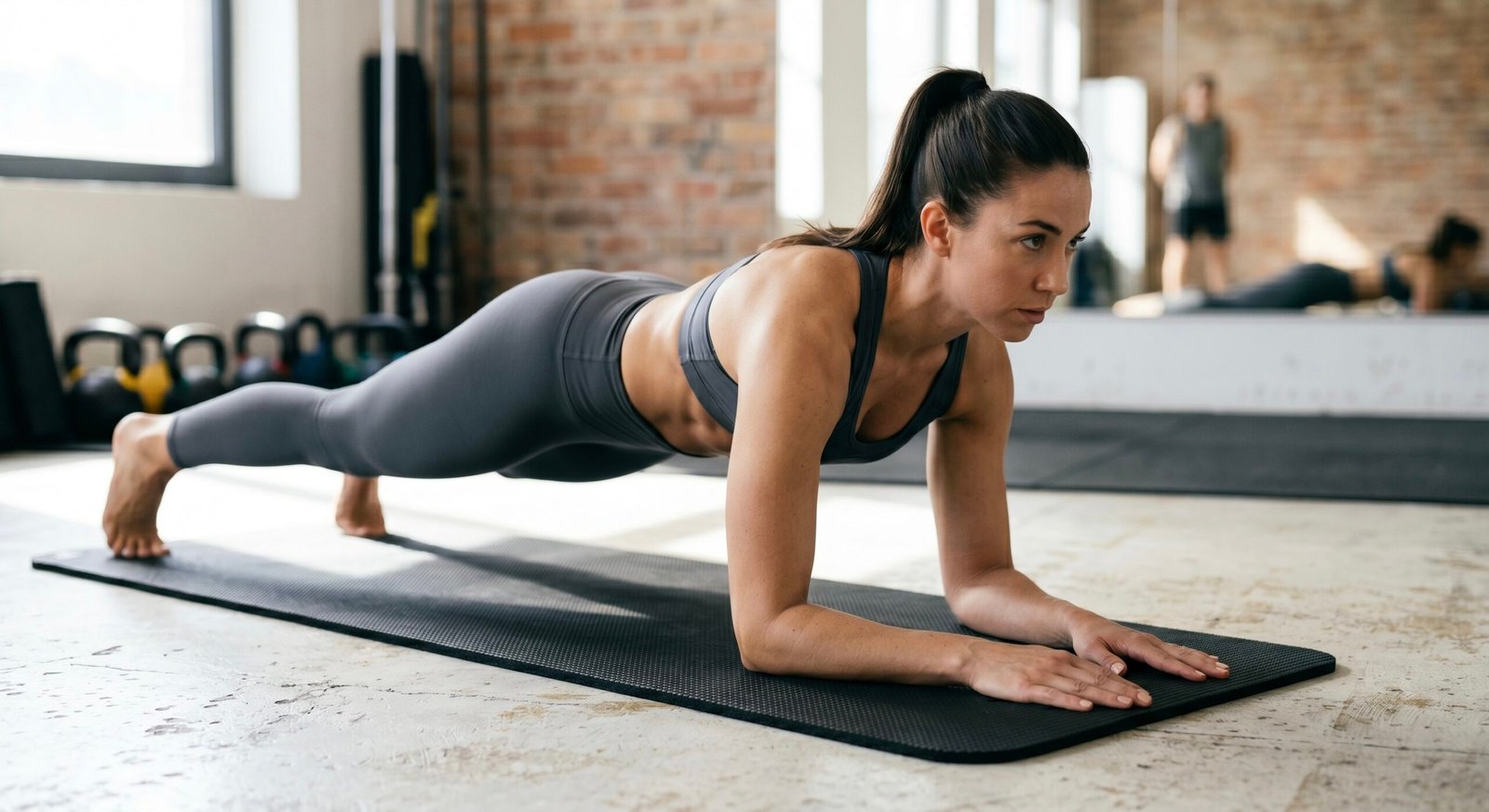
Core Exercises for Kitesurfing: 5 Moves to Boost Your Riding
Ever wonder why your abs feel like they did a thousand situps after a windy day on the water? That is because kitesurfing is the ultimate full-body workout where your core acts as the bridge transferring power from your kite harness directly to your board.
Training Matrix Overview
Building a strong midsection is the absolute fastest way to improve your board control, maintain a solid edge, and protect your lower back from strain. Incorporate these five targeted core exercises for kitesurfing into your training to fast-track your progression.
1. The Hollow Body Hold: Mirror Your Riding Posture
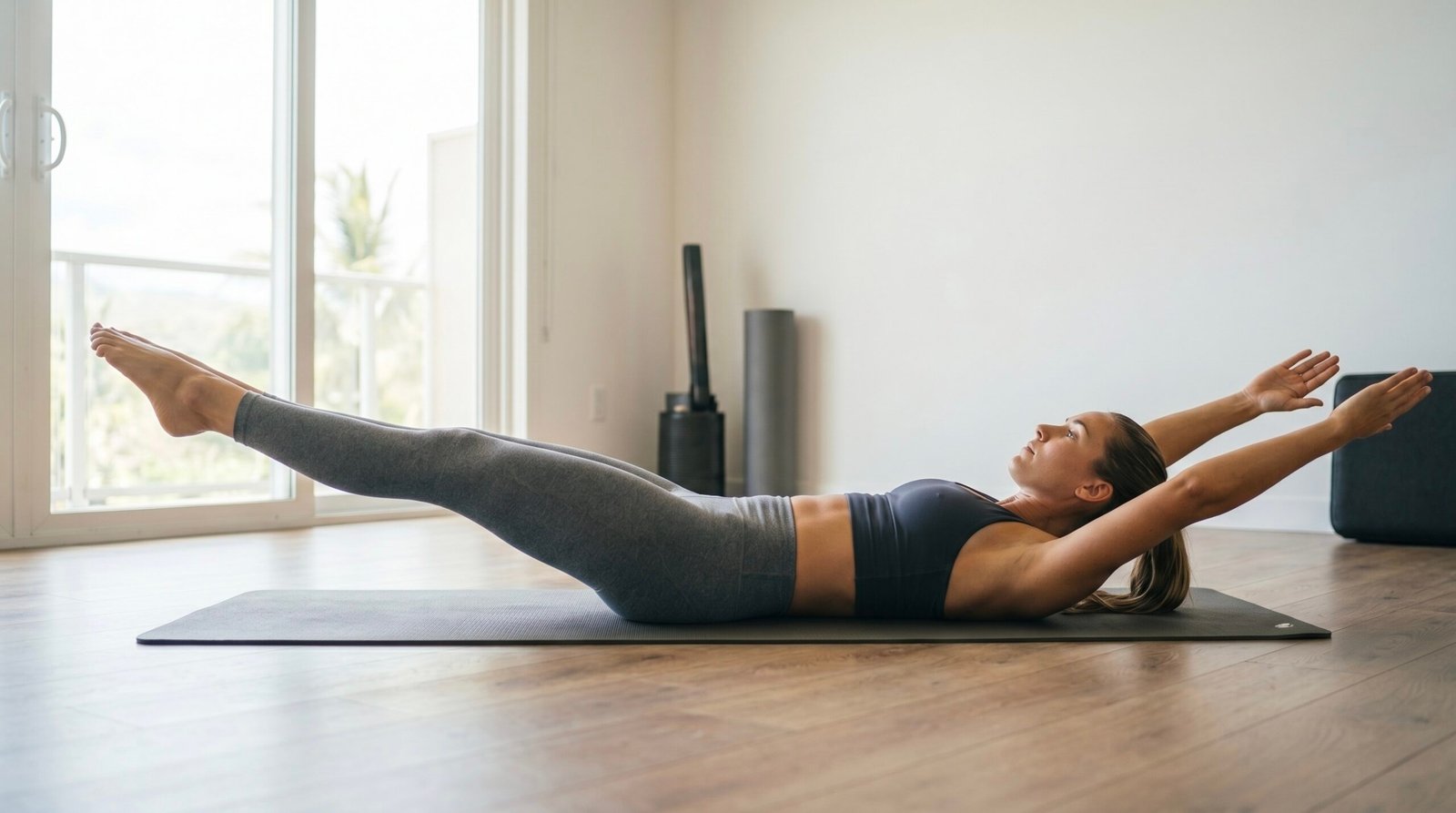
Static positioning — a fitness enthusiast on a yoga mat performing a perfect hollow body hold in a bright home gym.
This exercise perfectly replicates the isometric tension your core experiences when you lean back in your harness to resist the pull of the kite.
How to do it: Lie flat on your back, arms extended overhead, legs straight. Press your lower back firmly into the floor, then lift your shoulder blades and legs a few inches off the ground to form a shallow banana shape.
The Kite Connection: This builds the essential torso stiffness needed to drive through your heels and ride upwind without your hips sagging.
Target: Hold for thirty seconds, repeat three times.
2. Russian Twists: Power Up Your Obliques
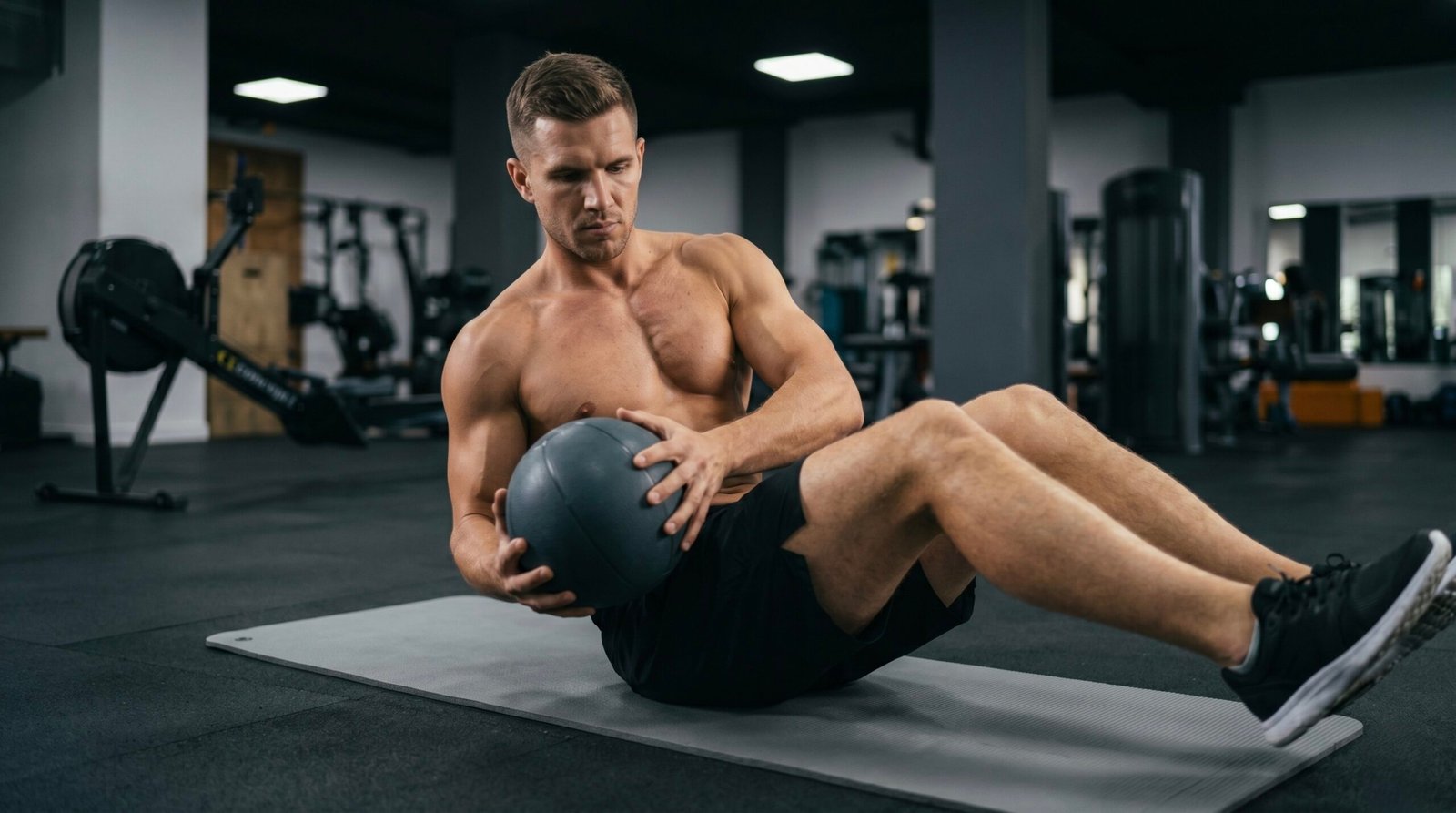
Rotational tracking — an athlete sitting on a gym mat holding a light medicine ball, rotating their torso in a controlled Russian twist.
Kitesurfing is dynamic; you are constantly twisting your torso to look where you want to go and carve transitions. Strong obliques keep your body aligned in choppy water.
How to do it: Sit on the floor with knees bent and feet slightly elevated. Lean back at a forty-five-degree angle, keep your spine straight, and rotate your torso slowly side to side.
The Kite Connection: Obliques do the heavy lifting every time you carve a hard turn or switch from heel-side to toe-side.
Target: Perform three sets of twenty total twists.
3. Hanging Knee Raises: Perfect Your Water Starts
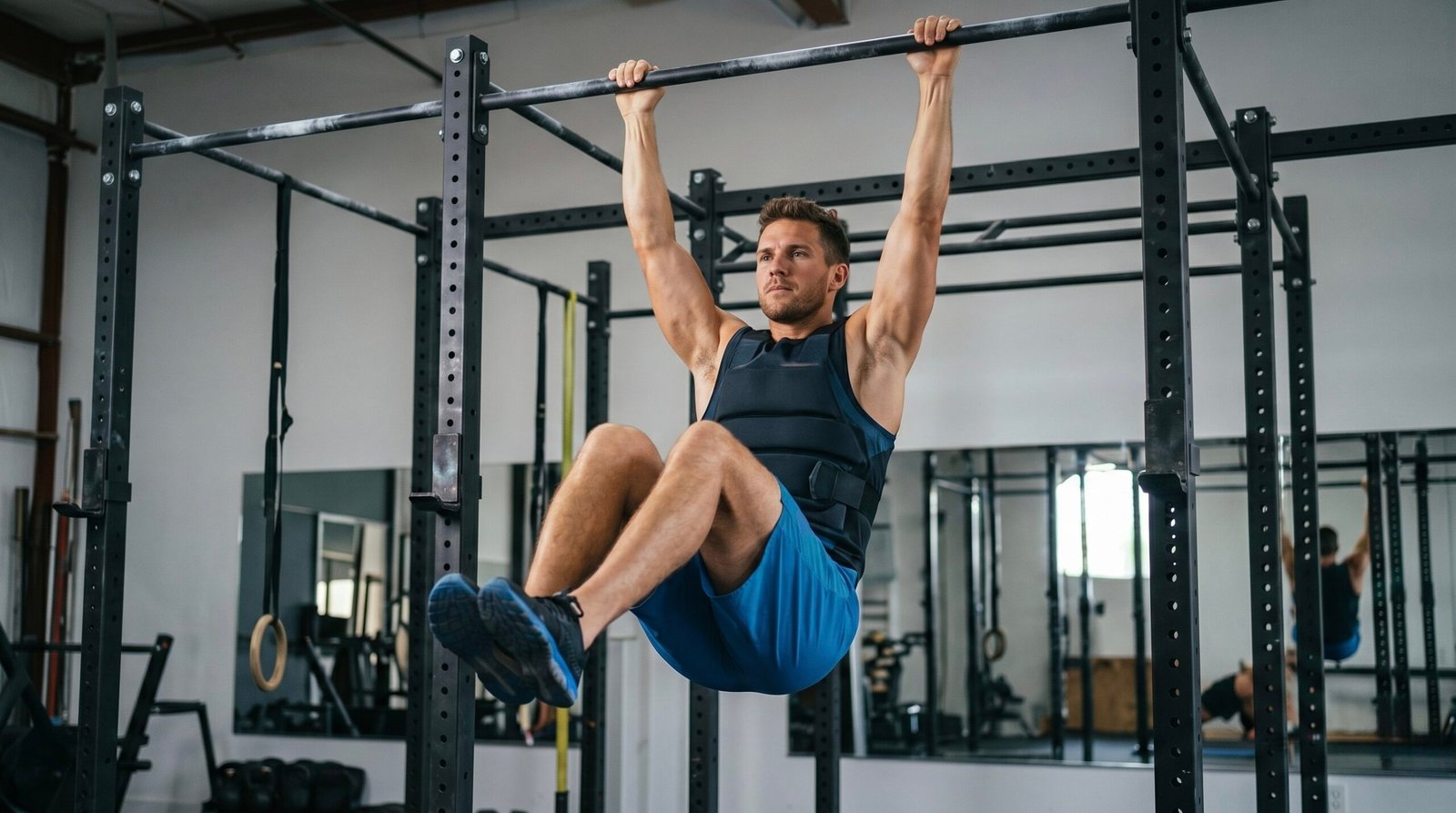
Lower ab activation — a close-up of an athlete hanging from a bar and executing a controlled knee raise toward their chest.
Pulling your knees toward your chest during a water start requires serious lower abdominal strength. Hanging knee raises target these hard-to-reach muscles while boosting grip strength.
How to do it: Hang from a pull-up bar with an overhand grip. Avoid swinging, slowly exhale, and pull your knees up toward your chest, then lower them with complete control.
The Kite Connection: Replicates the exact hip flexor and lower-abdominal power needed to pull your board up to slide into your footstraps.
Target: Three sets of ten to twelve controlled reps.
4. Side Plank with Rotation: Bulletproof Your Ribs
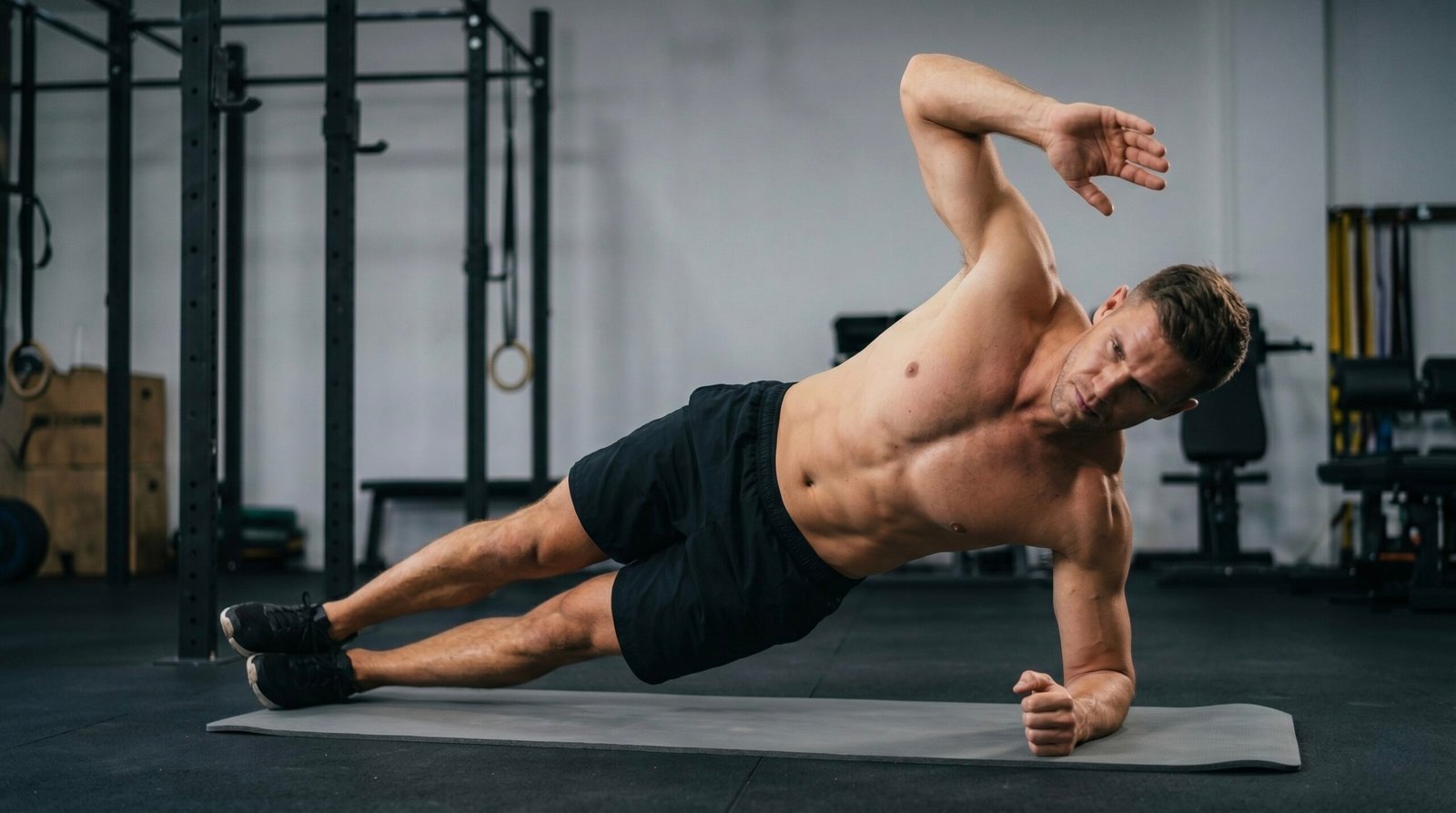
Lateral stability — a person in a side plank position on their forearm, twisting their upper body to reach their free hand under their torso.
Oblique stability is your primary shield against the impact of hard crashes. Adding a rotational thread-the-needle movement to a standard side plank builds dynamic stability that keeps you locked in on your edge.
How to do it: Start in a side plank on your elbow. Reach your top arm straight up, then slowly sweep it down and under your torso, twisting your chest toward the floor before returning to the start.
The Kite Connection: Prevents your upper body from folding forward when sudden gusts hit, keeping your edge secure.
Target: Ten rotations per side, repeating for three sets.
5. Forearm Plank with Reach: Real-Time Balance Control
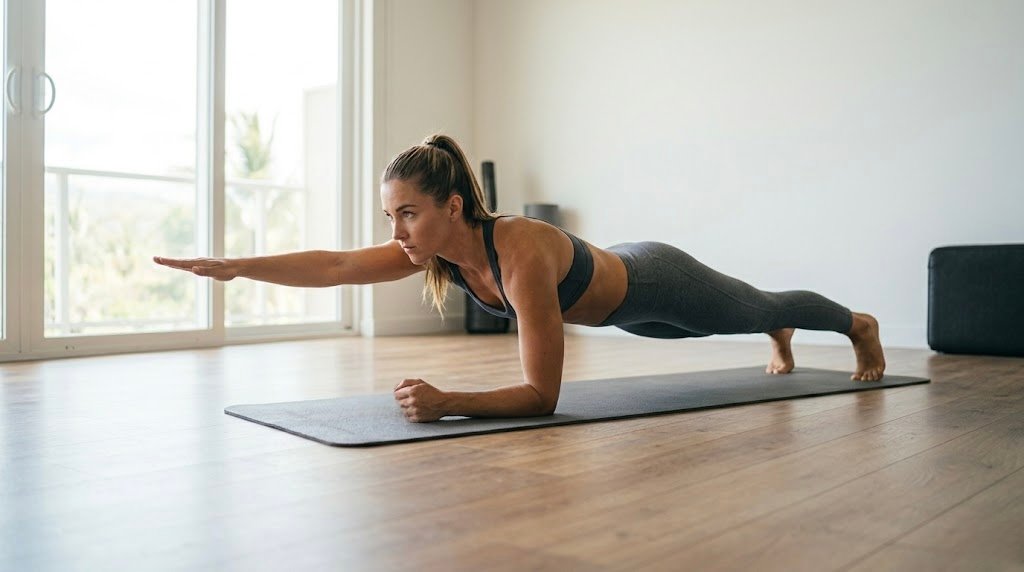
Unilateral resistance — a fit individual in a perfect forearm plank position, steadily reaching one arm straight out in front of them.
Static planks are great, but adding movement forces your deep stabilizing muscles to fire. Reaching forward trains your core to stay rock-solid while your limbs move independently.
How to do it: Hold a standard forearm plank with a flat back and active glutes. Without letting your hips tilt or rock, slowly reach one arm straight out in front of you, hold for a second, place it down, and switch.
The Kite Connection: Essential for staying balanced when steering with one hand while grabbing your board or adjusting your trim line.
Target: Three sets of ten total reaches.
Always prioritize proper form over raw repetition volume. If your lower back begins to arch or pull away from the floor during hollow holds or planks, terminate the set early to protect your lumbar spine.
How to Program Your Routine
Try doing this quick circuit three times a week to build a solid foundation that prevents kitesurfing injuries. Consistency is key, and this fast, high-impact routine will ensure you ride longer and safer during your next beach session.
A strong core is the ultimate secret weapon to transform your riding from shaky board starts to confident upwind cruising.
Start practicing these five moves today and get ready to experience your longest, most comfortable sessions on the water yet!
Ready to put your core strength to the test? Explore all 15 premier wind destinations on Kitescanner — from flat-water lagoons to ocean waves.
Find your next spot →