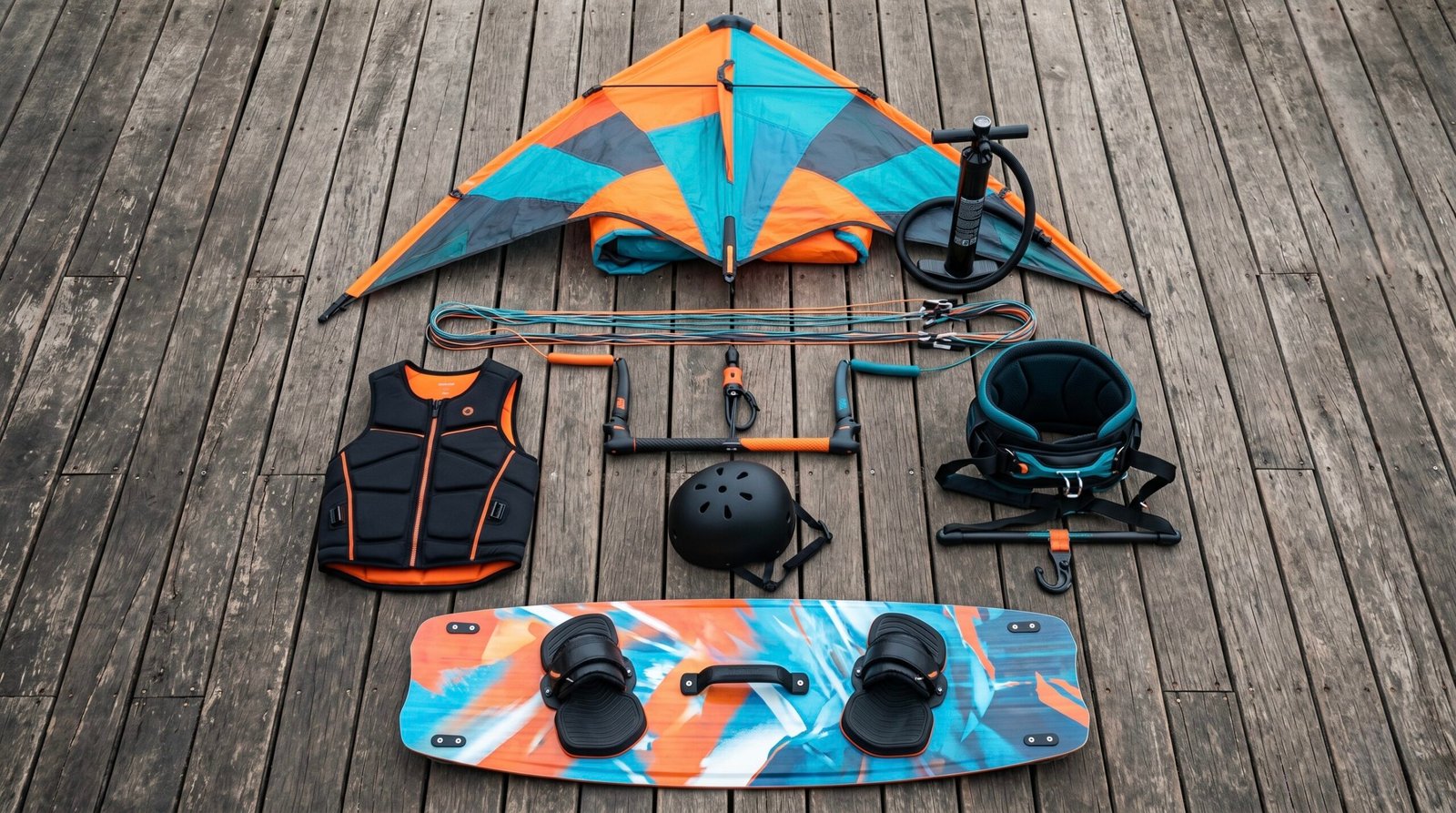
The Complete Kitesurfing Gear Checklist for 2026
So, you have finished your first few kitesurfing lessons, tasted the thrill of riding across the water, and now you are ready to invest in your own setup? Welcome to the club!
Essential Gear Blueprint
Buying your first set of kitesurfing gear is incredibly exciting, but walking into a shop (or browsing online) in 2026 can feel overwhelming with all the tech talk about new materials, safety systems, and board designs. This friendly, jargon-free checklist breaks down exactly what you need to get on the water safely and confidently this year.
The Kite: Your Ticket to Flight
In 2026, the kitesurfing market is filled with ultra-light materials like Aluula and high-tech dacron blends. While these materials are amazing for high performance, as a beginner, your main priority is finding a kite that is easy to relaunch, highly stable in the air, and has a massive wind range.
Look for a "sheet-and-go" hybrid, bow, or delta-shaped kite. These shapes are designed to lift off the water almost automatically when you pull one side of the bar, saving you tons of energy.
- The Golden Rule of Sizing: Most kiters start with a two-kite quiver to cover different wind strengths. For an average-weight rider (around 75 to 85 kilograms), a 9-meter and a 12-meter kite are the perfect combination. If you can only buy one kite to start, look at a 10-meter or 11-meter depending on your local spot.
- What to Avoid: Stay far away from high-performance C-kites. They are built for advanced freestyle loops, are very difficult to relaunch, and do not depower easily when a strong gust hits.
The Control Bar: Your Steering Wheel and Brake
Your control bar is your direct connection to the kite, and more importantly, it houses your primary safety systems. Modern 2026 control bars have made safety incredibly simple and intuitive.
Single Front-Line Flag Out: This is the industry safety standard. When you push your quick release, the kite should immediately lose all power and fall to the water, held by just one front line.
Click-In Chicken Loop: Look for a bar with a click-in quick release (similar to a seatbelt). If you have to trigger your safety in an emergency, reassembling the loop in deep water should be a simple one-click process, not a complicated puzzle.
Line Length: Standard 22 to 24-meter lines are perfect for beginners, offering a stable and predictable steering speed.
Rent Before You Buy: Many schools will let you try different board sizes and kite models. Use this opportunity to see what feels best under your feet before dropping cash on a full setup.
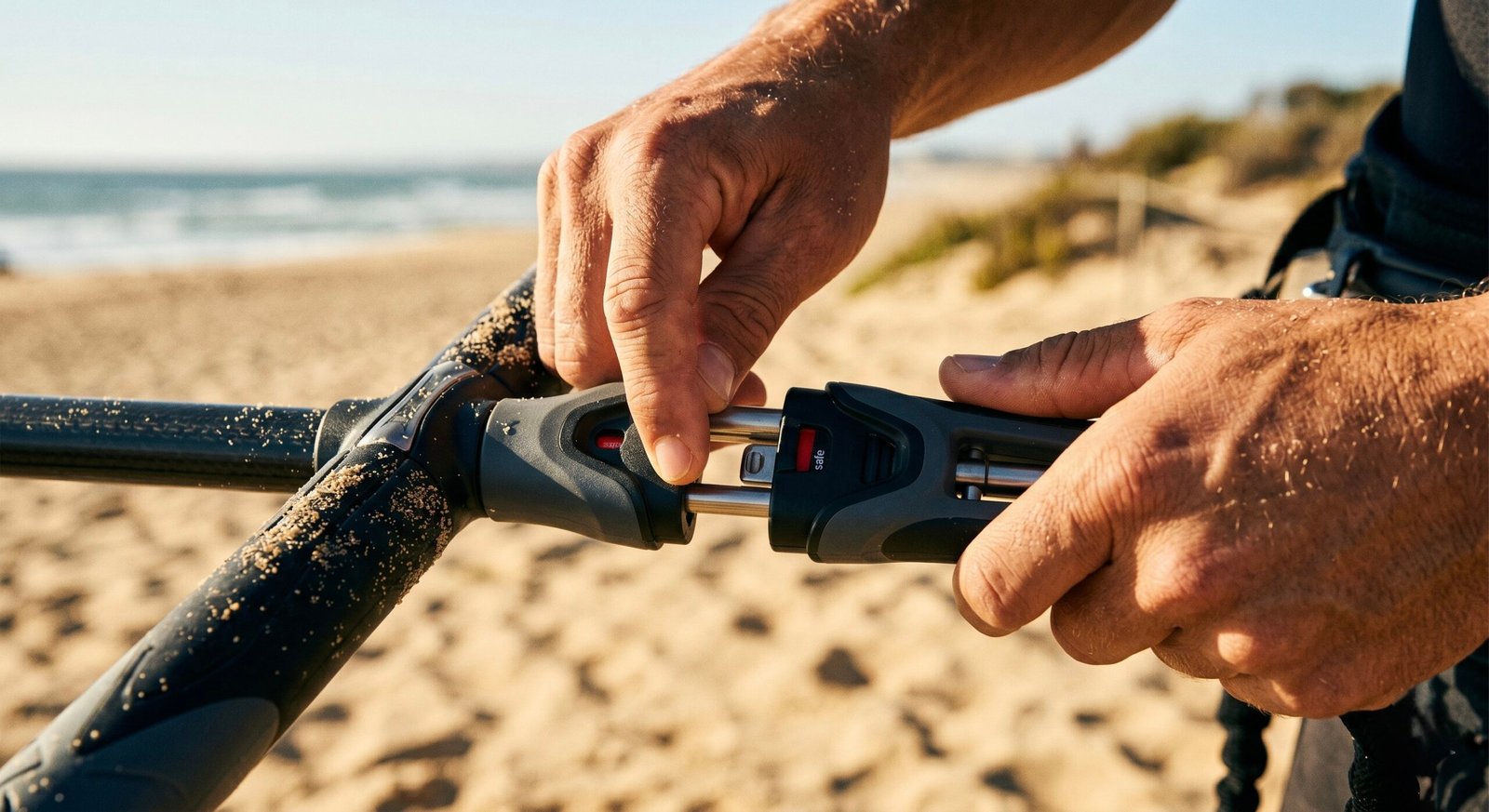
Intuitive protection, modern click-in quick release control loops function just like a seatbelt for swift reassembly in deep water.
The Board: Finding Your Perfect Platform
When you are learning to ride upwind, size is your best friend. Many beginners make the mistake of buying a board that is too small because they want to "grow into it," but this only delays your progression.
Go Big and Flat: Look for a twin-tip board that is relatively wide and has a flat rocker (the curve of the board from tip to tail). A flatter, larger board (around 140 to 145 centimeters in length for an average rider) planes much faster, handles chop better, and makes going upwind ten times easier.
Flex is Key: A board with medium-to-soft flex will absorb the bumps of choppy water, making your rides smoother and saving your knees from impact fatigue.
The Harness: Seat vs. Waist
Your harness is where all the pull of the kite is transferred, so comfort is absolutely everything.
Seat Harness (Best for Beginners): Seat harnesses have leg straps that keep the harness from sliding up to your chest. They sit lower on your hips, lowering your center of gravity and making it much easier to stay balanced during your first water starts.
Waist Harness (Best for Progression): Once you can consistently ride upwind and are starting to jump, a waist harness offers more freedom of movement for your legs and hips.
The Spreader Bar: Make sure the harness features a secure, easy-to-use click or hook system that you can release quickly if needed.
Safety Accessories: Non-Negotiables
Never hit the water without these three life-saving pieces of equipment:
- The Safety Leash: This elastic cord connects your harness to your control bar's safety line. As a beginner, always use a short leash attached to the front of your harness so you can reach the quick release easily.
- An ISO-Approved Impact Vest: It provides essential flotation when you are swimming after a lost board and cushions your ribs during those inevitable hard crashes.
- A Multi-Sport Helmet: Look for a lightweight, water-specific helmet. It protects your head from stray boards and is often required at most local beaches and schools.
🛒 Shop the essentials
Everything on this checklist, ready to browse on Amazon.
No Board Leashes: We cannot stress this enough—leave the board leash in the shop. They turn your lost board into a dangerous projectile that can snap back and hit you in the head. Master the upwind body drag instead!
Personal Protection and Apparel
Finally, you need to protect yourself from the elements so you can maximize your time on the water.
The Right Wetsuit: Even in warm water, a thin 2-millimeter shorty protects against wind chill and harness rash. For cooler waters, a high-quality 4/3-millimeter eco-friendly natural rubber wetsuit is the gold standard for 2026.
Neoprene Booties: If your local spot has shells, rocks, or sea urchins, booties are a mandatory investment to prevent trip-ending foot cuts.
Polarized Floating Sunglasses: Guard your eyes from intense water reflection with secure, strapped sunglasses that will not sink if they fall off during a crash.
Avoid Ancient Gear
If buying used, do not buy anything older than five years. Safety systems and materials have evolved rapidly, and older gear is often unsafe or degraded by UV rays and salt.
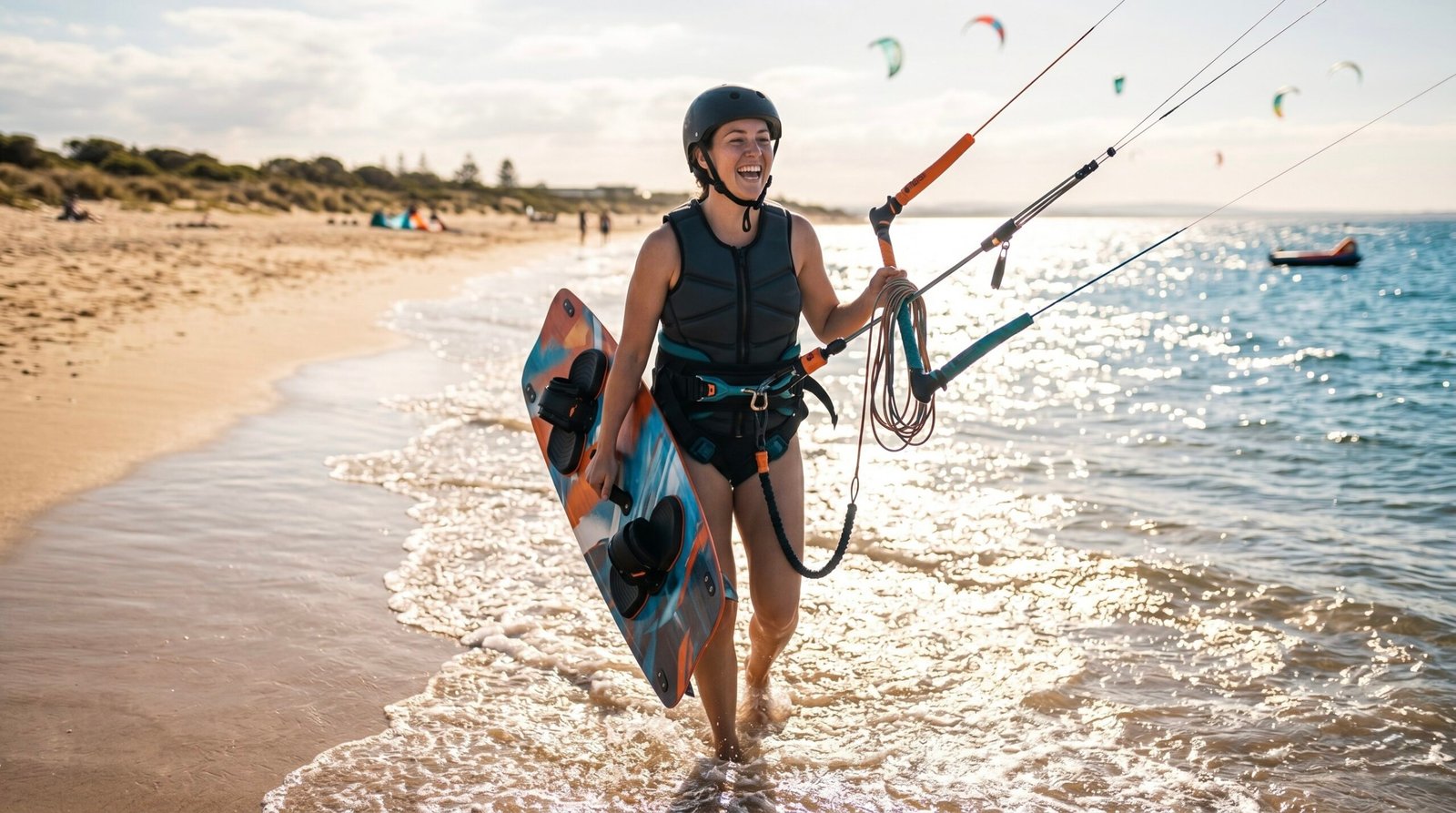
Fully equipped safety setup wearing an ISO-certified impact vest, specialized water helmet, and a proper low-slung harness system.
Investing in your first kitesurfing setup is the ultimate step toward complete riding independence. Grab the right gear for your local conditions, respect the safety systems, and get ready to experience the best rides of your life!
Ready to find your next spot? Explore all 15 destinations on Kitescanner — from flat-water lagoons in Morocco to the turquoise Caribbean.
Explore all spots →