What to Expect From Your First Kitesurfing Lesson: A Beginner's Guide
Staring at the horizon, watching kiters effortlessly fly across the water, and thinking about booking your first kitesurfing lesson is incredibly exciting. But let's be honest: it is also totally normal to feel a little bit of first-session stage fright before you head to the beach.
Lesson Day One Roadmap
Kitesurfing looks like an extreme, high-flying balancing act, but the learning process is actually highly structured, safe, and incredibly fun. Here is exactly what to expect from your very first day on the sand, so you can turn those nerves into pure excitement.
Inside Your First Kitesurfing Lesson: Step-by-Step on Land
Do not expect to jump straight onto a board the minute you arrive at the beach. In fact, you will not even touch a board during your first session, and that is a very good thing! Before you can ride, you have to master the wind.
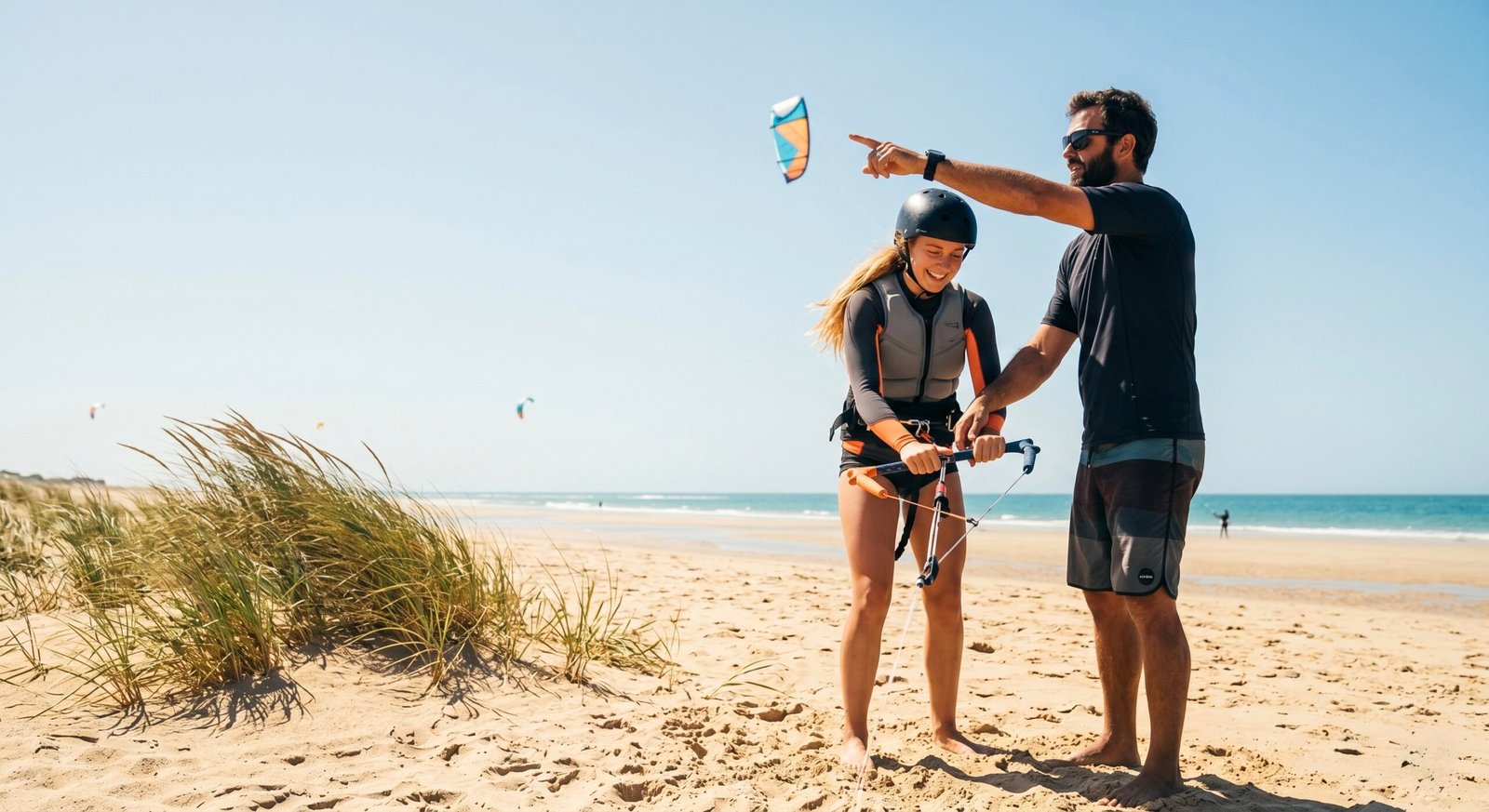
Your instructor from the kitesurfing school will start on the sand with a trainer kite or a small, depowered inflatable kite. Here is what your land-based training looks like:
- The Wind Window: You will learn how the wind moves around you. This is the ultimate map of kitesurfing, teaching you where the kite has neutral power (at the edges) and where it generates maximum pull (the power zone).
- Kite Setup: You will learn how to pump up a modern kite, connect the four lines to the control bar, and pre-flight check your gear to ensure nothing is twisted.
- Basic Kite Control: You will practice flying the kite to different positions in the sky (usually referred to like numbers on a clock) and learning how gentle inputs on the bar translate to smooth movements in the air.
Safety First: Mastering the Safety Systems
The biggest breakthrough in modern kitesurfing is the incredibly high-tech safety gear. Before you ever launch a kite with real power, your instructor will make sure you are an expert at letting go.
You will wear a comfortable harness, and the control bar will be clipped to your chest. The primary lesson here is muscle memory for your safety systems:
The "Let Go" Rule: If you get pulled too hard, simply letting go of the control bar immediately dumps ninety percent of the kite's power. It is your ultimate panic button.
The Quick Release: You will practice triggering the mechanical quick release on your chicken loop. This completely flags the kite out on a single line, dropping it safely to the water with zero remaining pull.
Relax Your Grip: Beginners tend to hold the control bar like they are riding a rollercoaster. Relax your hands! Modern kites require light, subtle steering adjustments, not heavy physical muscle.
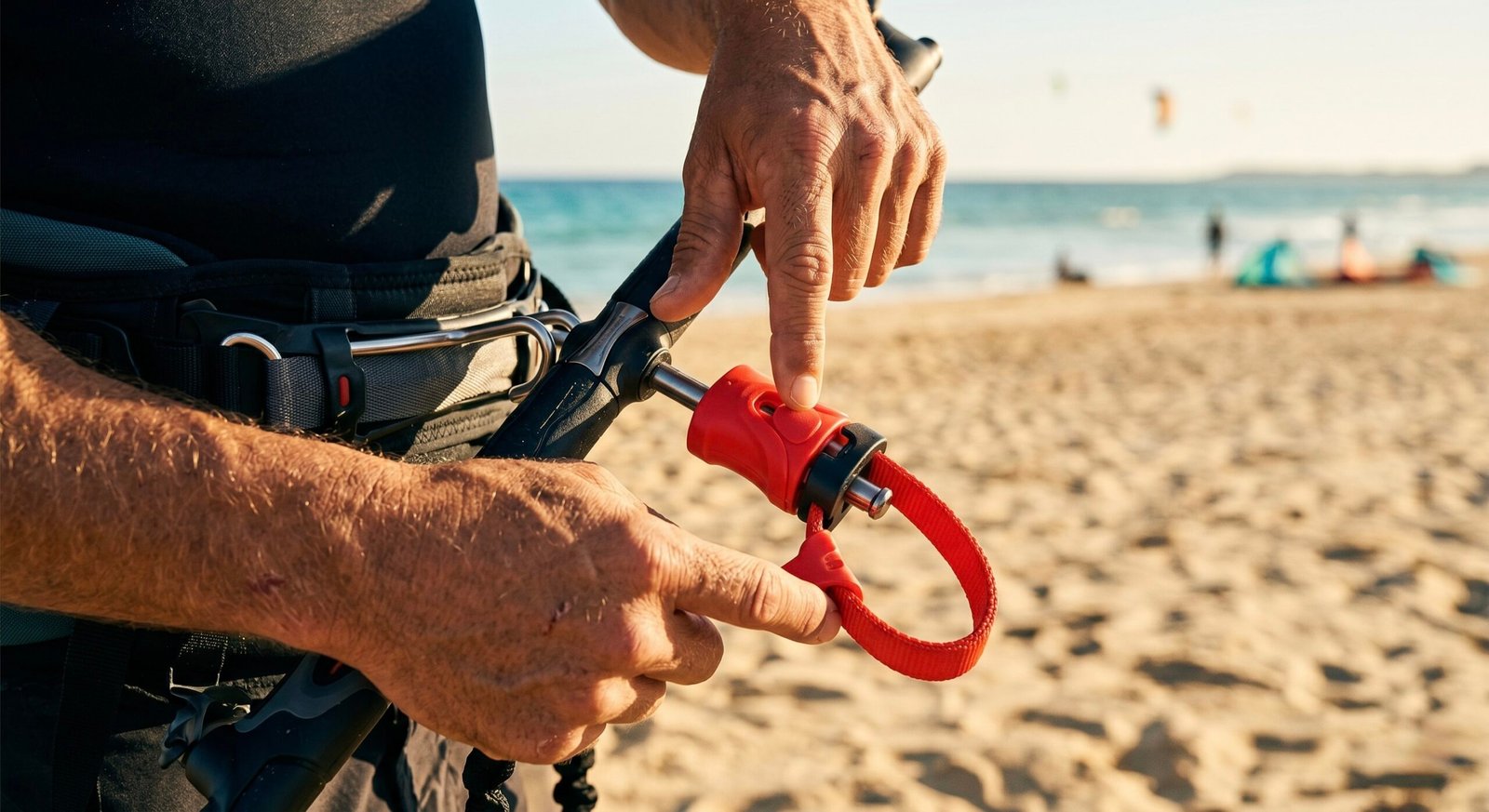
Safety mechanics — an instructor demonstrating how to cleanly trigger the primary quick-release pin system on the beach.
Getting Wet: Your First Body Drag
Once you can fly the kite on land without looking at it constantly, it is time to head into the water for body dragging. This is easily the most fun part of your first kitesurfing lesson.
Leaving the board on the beach, you will use the power of the kite to pull your body through the water like a human jet ski. It feels wild, but it is an essential safety skill. You will learn how to slide left and right, which is exactly how you will navigate back to a lost board in deep water later on.
Pro Tips to Get the Most Out of Your First Day
- Dress for the Wind: Even on hot days, the wind-chill factor in the water can make you cold. Wear a comfortable wetsuit or rashguard, and do not forget a high-SPF, water-resistant zinc sunscreen for your face.
- Listen to the Radio: Many modern schools use helmet-mounted radio headsets. Keep your ears open; your instructor can give you tiny steering corrections in real-time while you are in the water.
- Accept the Crashes: You will crash the kite. Everyone does! Modern kites are incredibly durable and designed to take a beating on the water, so do not stress when it falls.
🎒 Get lesson-ready
The gear your instructor won't provide — bring these on day one.
Progress takes patience. Trying to force board tracking before mastering your core kite flying skills will only delay your learning curve. Trust the sequence—your land and safety hours are what make board starts successful later on.
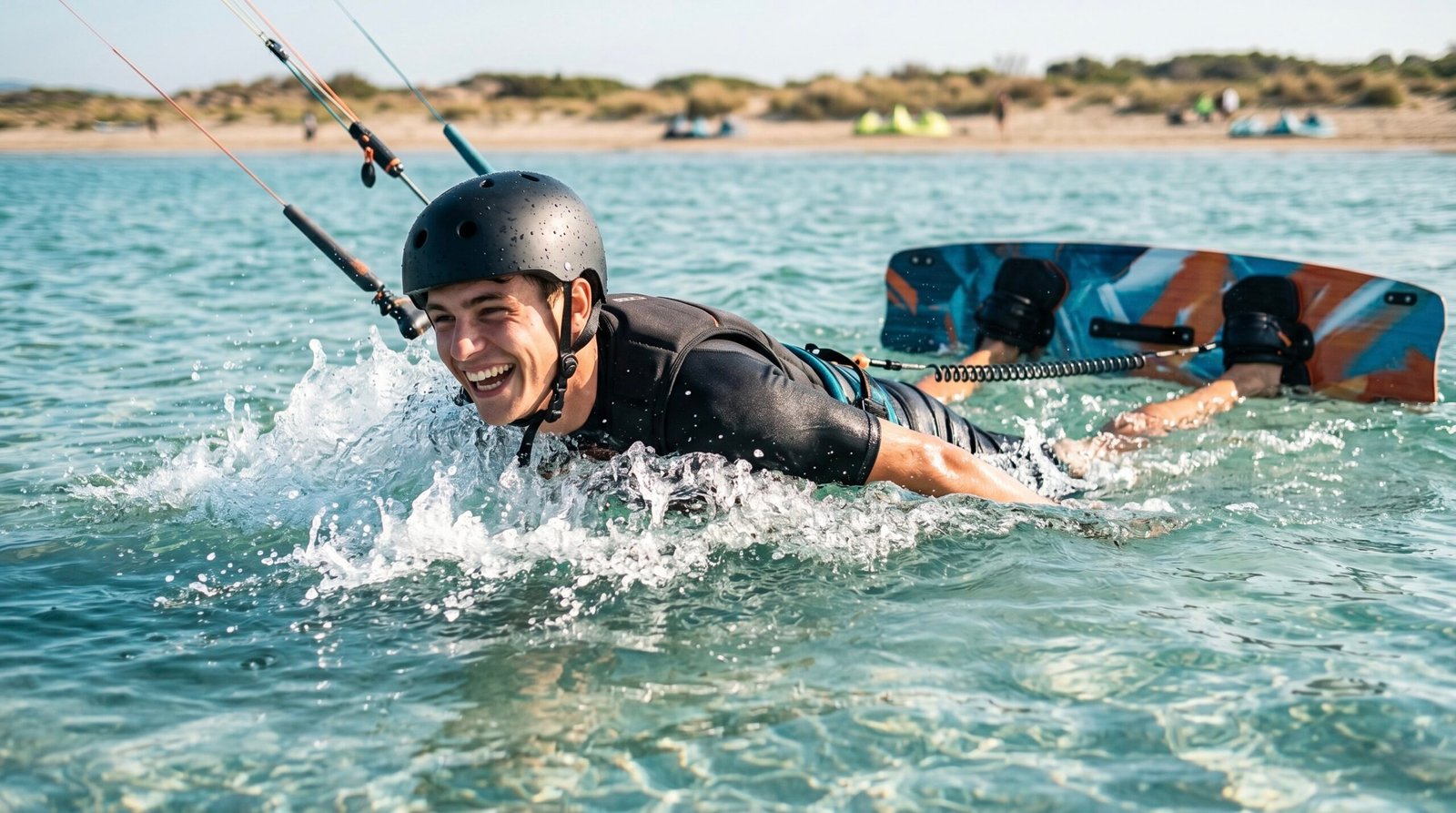
The water launch — experiencing your first powered body drag sequence to understand tracking angles and board recovery protocols.
Your first kitesurfing lesson is all about building confidence, mastering kite control, and realizing just how safe and intuitive the sport has become. Book that first session, trust your instructor, and get ready for a sport that will completely change your beach holidays forever!
Ready to pick your training ground? Explore all 15 destinations on Kitescanner — from flat-water lagoons in Morocco to the turquoise Caribbean.
Find a kite spot →