Kitesurfing in Paros: The Ultimate Beginner’s Guide to Greece’s Wind Corridor
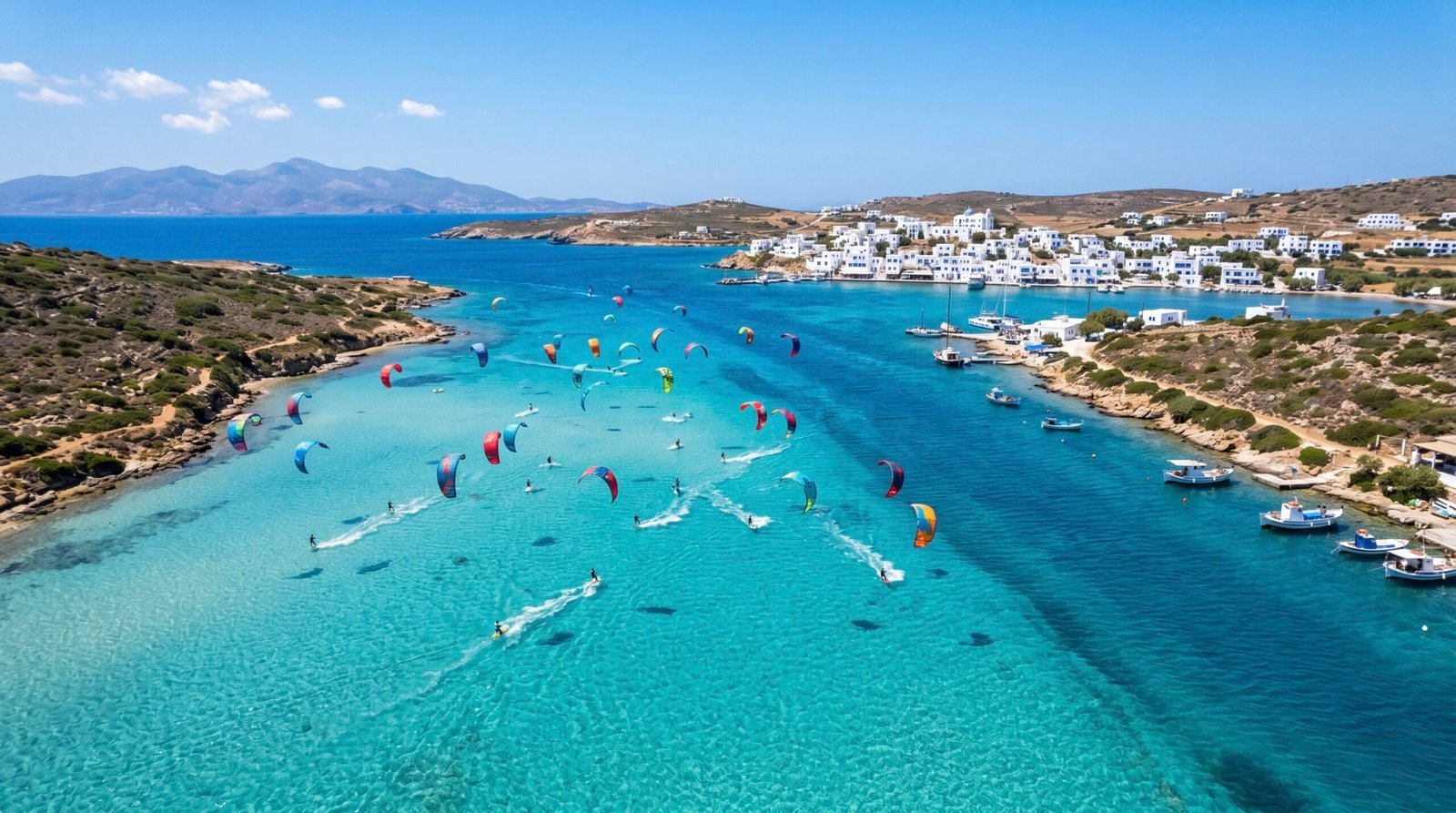
Dreaming of cruising over clear turquoise water with a steady summer breeze and a backdrop of classic whitewashed Greek villages? Welcome to Paros, a gorgeous island in the heart of the Cyclades that has earned a reputation as one of the windiest playgrounds in the entire Mediterranean.
Quick facts
For a progressing rider, kitesurfing in Paros is an absolute dream. While the Aegean Sea can look intimidating, the island features a unique geography that creates a highly safe and predictable environment, perfect for boosting your confidence and fast-tracking your skills.
The Meltemi Corridor: Why Paros Delivers
The secret to the island's legendary wind reliability is the Meltemi wind, a strong, dry northerly wind that sweeps across Greece from June to September. In Paros, this consistent breeze is supercharged by a massive natural funnel. The west coast of Paros sits just one kilometer away from the neighboring island of Antiparos. This narrow strait creates a powerful Venturi effect, compressing and accelerating the wind as it squeezes through the channel. When the open sea has a gentle 15 knots, this natural wind machine can easily pump out a steady 22 to 30 knots, making it incredibly reliable day after day.
Where to Launch: The Best Spots for Kitesurfing in Paros
While the island has several beaches, almost all of the action is focused on one world-class stretch of sand on the west coast.
Pounda Beach (The Mecca)
Located directly opposite Antiparos, Pounda Beach is the absolute center of the local scene. It features a massive, shallow turquoise lagoon with a sandy bottom where the water is waist-deep for hundreds of meters. Because the Meltemi wind blows side-shore or side-onshore here, it is exceptionally safe for beginners. If you drop your kite or lose your board, the wind naturally guides you back to the sandy shoreline.
Sizing Down is Key: Because the Venturi effect in the channel is so powerful, the wind at Pounda is often much stronger than the general island forecast. Always check in with local Paros kite schools before rigging up to avoid being overpowered. Use the shallow, flat-water zones to practice your water starts, and head into the channel only once you can consistently ride upwind.
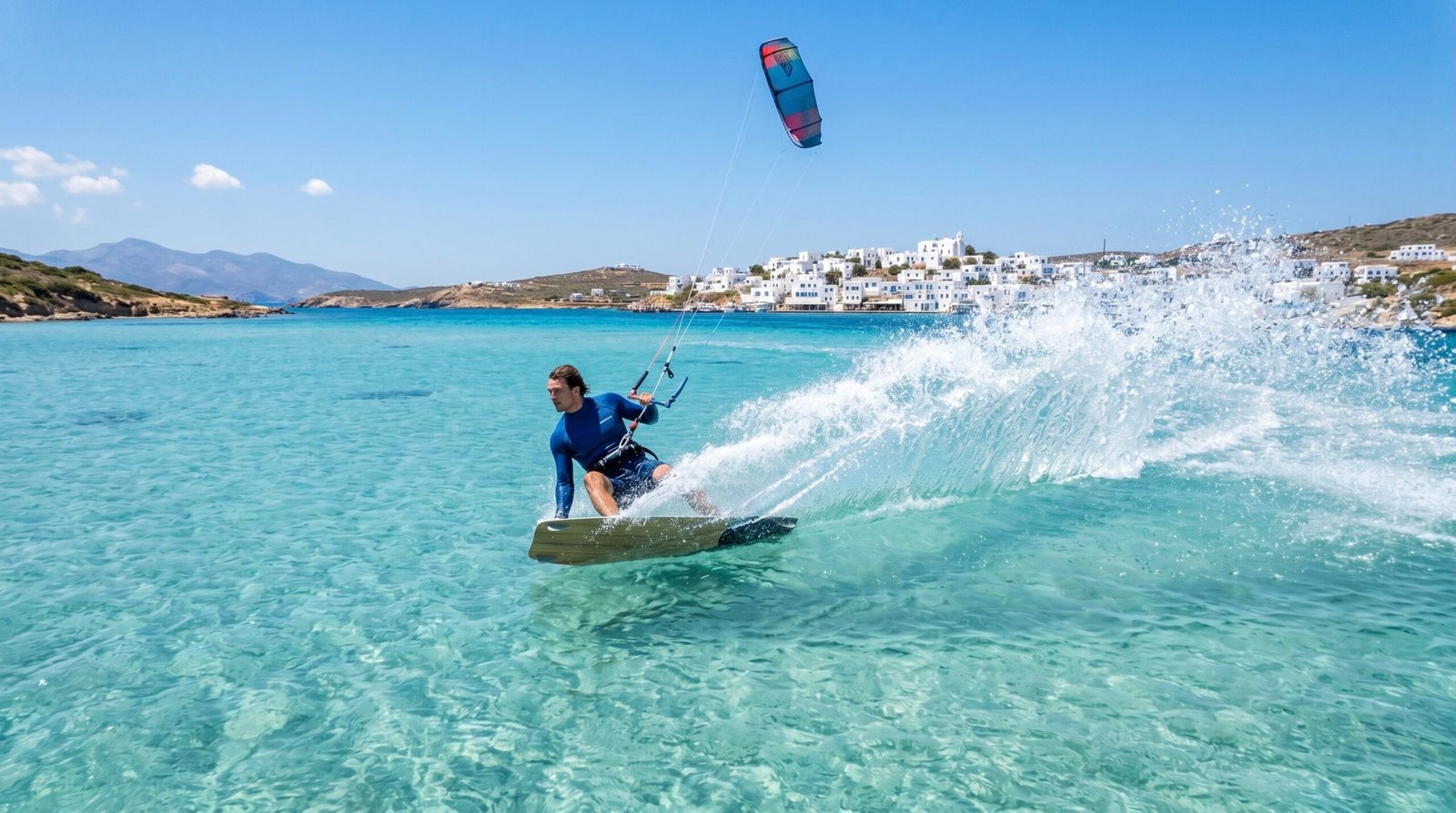
Lagoon freedom — a kiter carving smooth flat-water runs in front of the active Pounda beach area.
Golden Beach (Chrissi Akti)
On the east coast, Golden Beach is famous for windsurfing but offers a great alternative for intermediate and advanced kiters. The wind here is slightly more open-ocean, creating a mix of chop and rolling waves. It lacks the shallow, protected lagoon of Pounda, making it better suited for those who are already comfortable riding upwind and navigating deep water.
Timing Your Trip: When to Catch the Meltemi
- The Summer Peak (July and August): The absolute windiest months. The Meltemi blows with maximum power, often hitting 25 to 35 knots in the afternoon. It is fantastic for consecutive sessions, but the water gets busy and you will need small kite sizes.
- The Golden Shoulders (May to June and September): Outstanding months for learning. The wind is more forgiving, usually averaging 15 to 22 knots, and fewer crowds mean plenty of space to practice setting up your kitesurfing gear for beginners. September is a local favorite because the water is at its warmest.
- The Off-Season (October to April): The wind becomes highly unpredictable, the water cools down, and local schools close, meaning it is not recommended for dedicated kitesurfing trips.
Choosing the Right Paros Kite Schools
If you are still working on staying upwind, the local infrastructure is top-tier. Highly reputable centers like Paros Kite Pro Center and Paroskite offer professional, boat-supported lessons with certified instructors. Using radio-guided helmets is standard practice here, allowing your coach to give you instant tips while you are riding across the blue channel.
Your Concise Paros Packing List
- Kites: A 7m and 9m setup is the daily workhorse quiver for peak summer. Bring a 12m only if you are visiting in the lighter spring or autumn months.
- Wetsuit: No thick wetsuits are needed in summer. A simple 2mm shorty or a long-sleeved rashguard is perfect. Pack a 3/2mm full suit if visiting in May or October.
- Protection: High-SPF sunscreen and face-specific zinc are essential to combat the intense Mediterranean sun reflection.
- Board: A standard twin-tip. Do not bring board leashes; local schools strongly discourage them due to recoil risks in the shallow lagoon. Learn to body drag back to your gear instead.
Watch the Ferry Crossing: The small car ferry connecting Paros and Antiparos crosses directly through the northern end of the channel. Always maintain a safe distance from its path and give the ferry absolute right of way. Conditions in the main channel can develop a steady downwind current.
Logistics: Reaching the Cycladic Strait
Transport: You can fly directly into Paros National Airport (PAS) via connecting domestic hops from Athens. Alternatively, book a high-speed ferry from Athens ports (Piraeus or Rafina) straight to Parikia Port. Once on the island, renting a quad bike or scooter is the most flexible and fun way to explore the coast with your gear bags.
Accommodation: Stay directly in Pounda or nearby Aliki to stay close to the schools, or opt for the vibrant nightlife hubs of Naoussa or Parikia and commute to the strait daily.
📦 Recommended gear for this trip
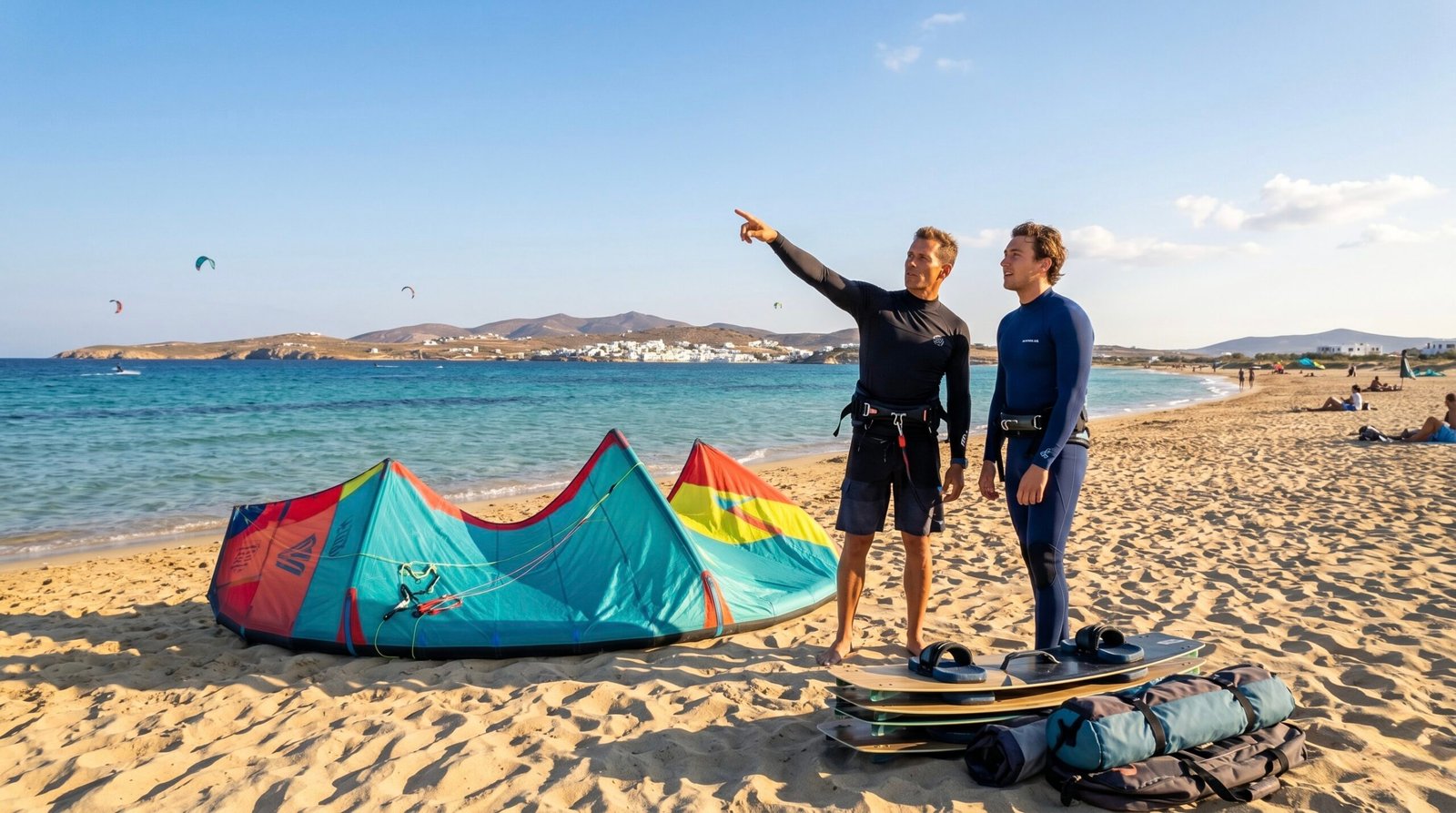
Pro setup — a beginner kiter receiving beachside safety instruction next to a stack of modern kites before heading into the channel.
Paros combines the ultimate natural wind funnel with a safe, shallow turquoise playground and laid-back Cycladic island vibes. Pack your bags, master your upwind riding, and get ready to experience one of Europe's finest kitesurfing arenas!
Ready to find your next spot? Explore all 15 destinations on Kitescanner — from flat-water lagoons in Morocco to the turquoise Caribbean.
Explore all spots →