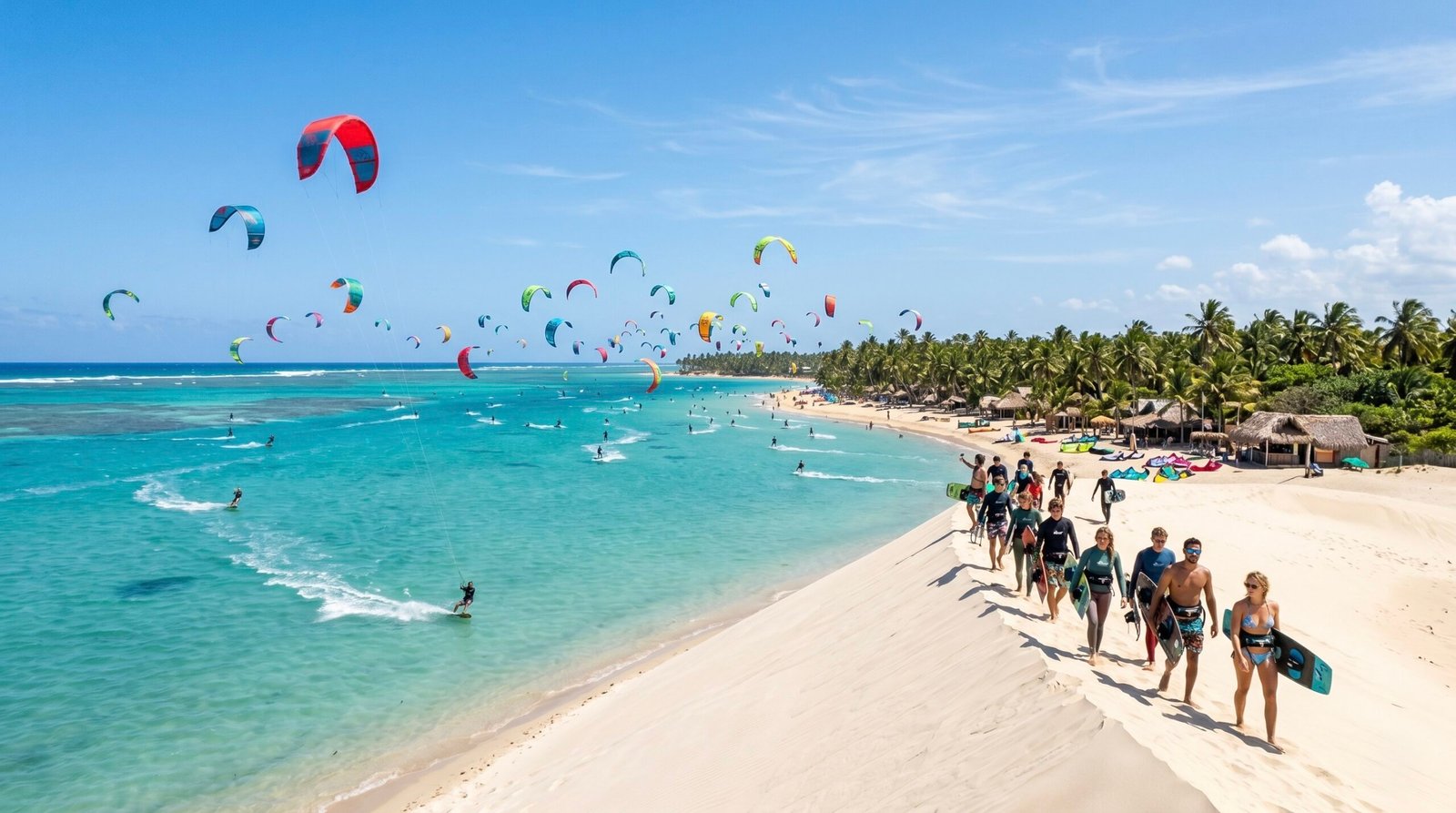
Kitesurfing in Cabarete: The Ultimate Beginner’s Guide to the Caribbean Mecca
Dream of warm, turquoise water, consistent daily winds, and a legendary beachside nightlife? Welcome to Cabarete, the Caribbean's original wind capital where you can learn to ride in boardshorts all year round.
Quick facts
If you’re ready to transition from your first body drags to sailing upwind, kitesurfing in Cabarete offers the ultimate playground. With highly reliable side-onshore winds and a vibrant, supportive community, this vibrant Dominican town is the perfect place to fast-track your progression.
The Caribbean Wind Engine: Why Cabarete Delivers
Cabarete’s wind reliability is legendary, boasting over 300 windy days a year. The magic starts with the Northeast trade winds (the Alizes), driven by the North Atlantic High-pressure system. As the tropical sun heats the Cordillera Septentrional mountains parallel to the coast, the rising warm air creates a local vacuum. This triggers a powerful afternoon thermal effect that regularly boosts the wind by an extra 5 to 10 knots, creating a highly predictable afternoon "wind machine."
Where to Launch: Best Spots for Kitesurfing in Cabarete
The Cabarete coastline offers distinct spots depending on what you want to practice. Here is where you should lay out your lines:
Bozo Beach (Cabarete Bay)
Located directly in front of the town center, Bozo Beach is wide, highly accessible, and offers plenty of room. It’s mostly choppy water with a fun shorebreak. Because the wind here is side-onshore, it’s incredibly safe for beginners—if you lose your board, the wind naturally washes you back to the sand.
Kite Beach
Roughly 2 kilometers west of the main bay lies the world-famous Kite Beach. An offshore reef about 300 to 400 meters out protects the inside, creating flat water that's ideal for intermediates. The catch: The reef is shallow and home to sea urchins and fire coral. July and August erosion also makes the launch zone tight.
Avoid the Peak Rush: Kite Beach gets incredibly crowded between 2:00 PM and 4:00 PM. Go out during lunch or wait for the stunning "Golden Hour" session at sunset when the crowds thin out.
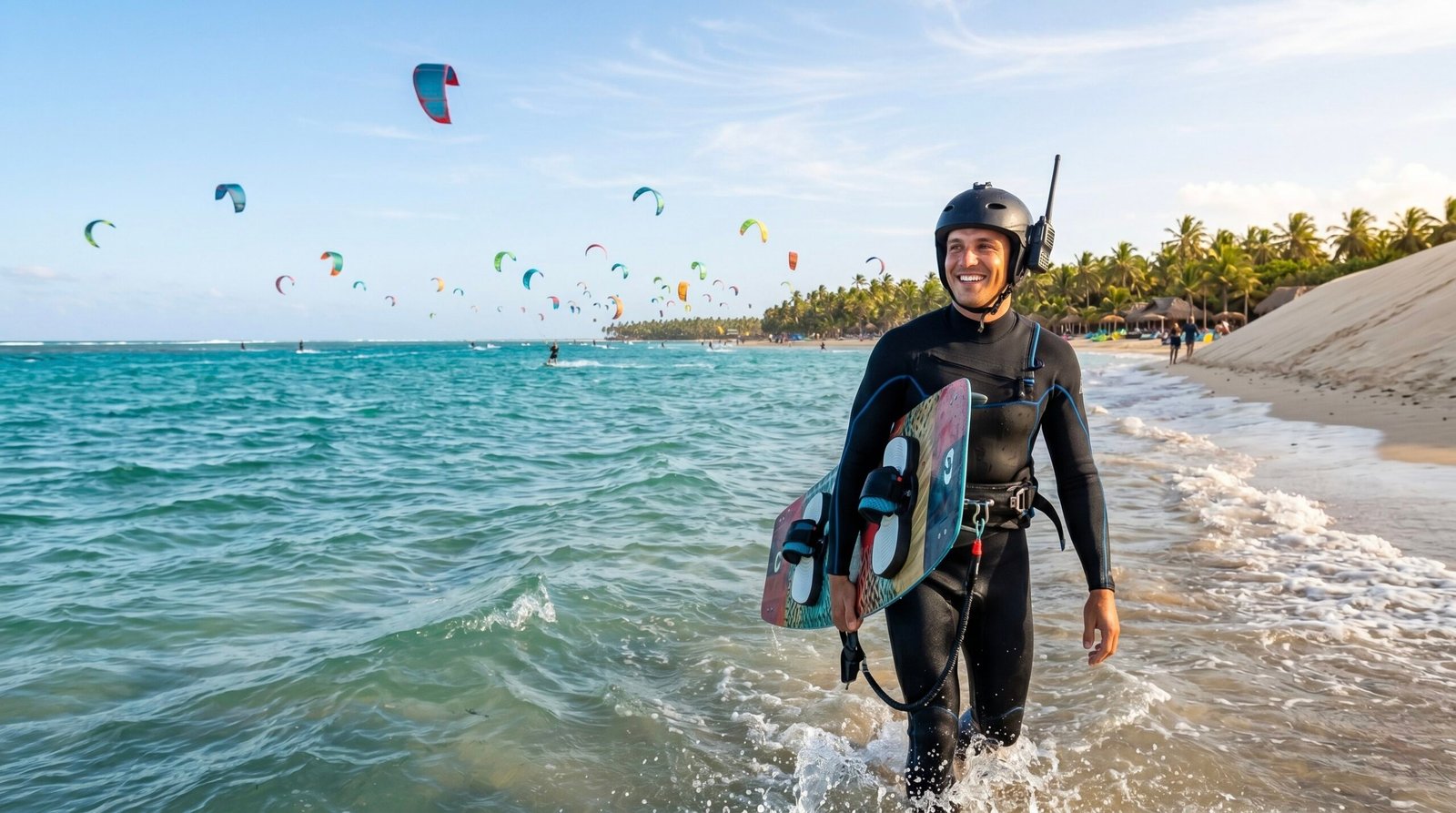
A beginner kiter wearing a radio-helmet, smiling as they prepare to carry their twin-tip board into the warm waters of Bozo Beach.
La Boca (Rio Yasica)
About 7 kilometers east of town, this river mouth offers butter-flat water. It is a freestyle paradise, but the launch area is tiny and can only fit 3 to 4 kiters at a time. It's best reserved for confident intermediates.
Playa Encuentro
Famed as the North Coast's premier surf break, Encuentro transforms into a wave-riding kite spot in the afternoon. It is a reef break with consistent waves, but watch out for the sharp rock shelf and the "no-beach" rocky zones on the way upwind from Kite Beach.
Timing Your Trip: When to Chase the Alize
- The Summer Peak (June–August): The absolute windiest window. Thermal effects regularly pump the wind to 18 to 30 knots by the afternoon. You’ll want smaller, highly responsive kites.
- The Winter Fronts (December–March): Driven by passing Atlantic cold fronts. The wind ranges from 15 to 24 knots and brings fantastic wave conditions, making it the perfect winter escape.
- The Fall Lulls (September–November): The official low season. Wind is less reliable, but it's a great time for light-wind hydrofoiling.
Choosing the Right Cabarete Kite Schools
Cabarete has a highly mature teaching ecosystem. To get the best instruction, choose schools with certified IKO (International Kiteboarding Organization) instructors, such as Laurel Eastman Kiteboarding (LEK) or GoKite. These top-tier centers use radio-guided helmets, allowing your instructor to coach you in real-time as you attempt your first water starts in the chop.
Your Concise Cabarete Packing List
- Kites: A 9m and 12m setup is the perfect summer quiver; add a larger 14m kite for winter mornings.
- Board: A forgiving twin-tip is ideal for navigating the bay's chop.
- Protection: High-SPF zinc sunscreen, a secure sun hat, and high-quality rashguards. No wetsuit is needed as the water stays a warm 26–28°C (79–82°F).
- Reef Booties: Strongly recommended for Kite Beach to protect against sharp coral and sea urchins.
- No Leashes: Leave the board leash at home—it’s a major recoil hazard in the surf. Learn to body drag back upwind instead.
Avoid the tap water entirely (even for brushing teeth) to prevent illness. Also, watch out for the local rum pours—they are notoriously strong! When traveling to spots, exercise extreme caution if using motorcycle taxis (motoconchos), as they rarely provide helmets and traffic can be chaotic.
Local Insider Tips for the Strategic Kiter
The Ultimate Downwinder: Take a motorcycle taxi (motoconcho) up to La Boca, kite the flat river water, and then enjoy an epic downwinder all the way past Kite Beach to Encuentro.
Digital Nomad Haven: Many beachside cafés offer reliable internet, making it easy to answer emails in the morning and ride all afternoon right from your laptop setup.
📦 Recommended gear for this trip
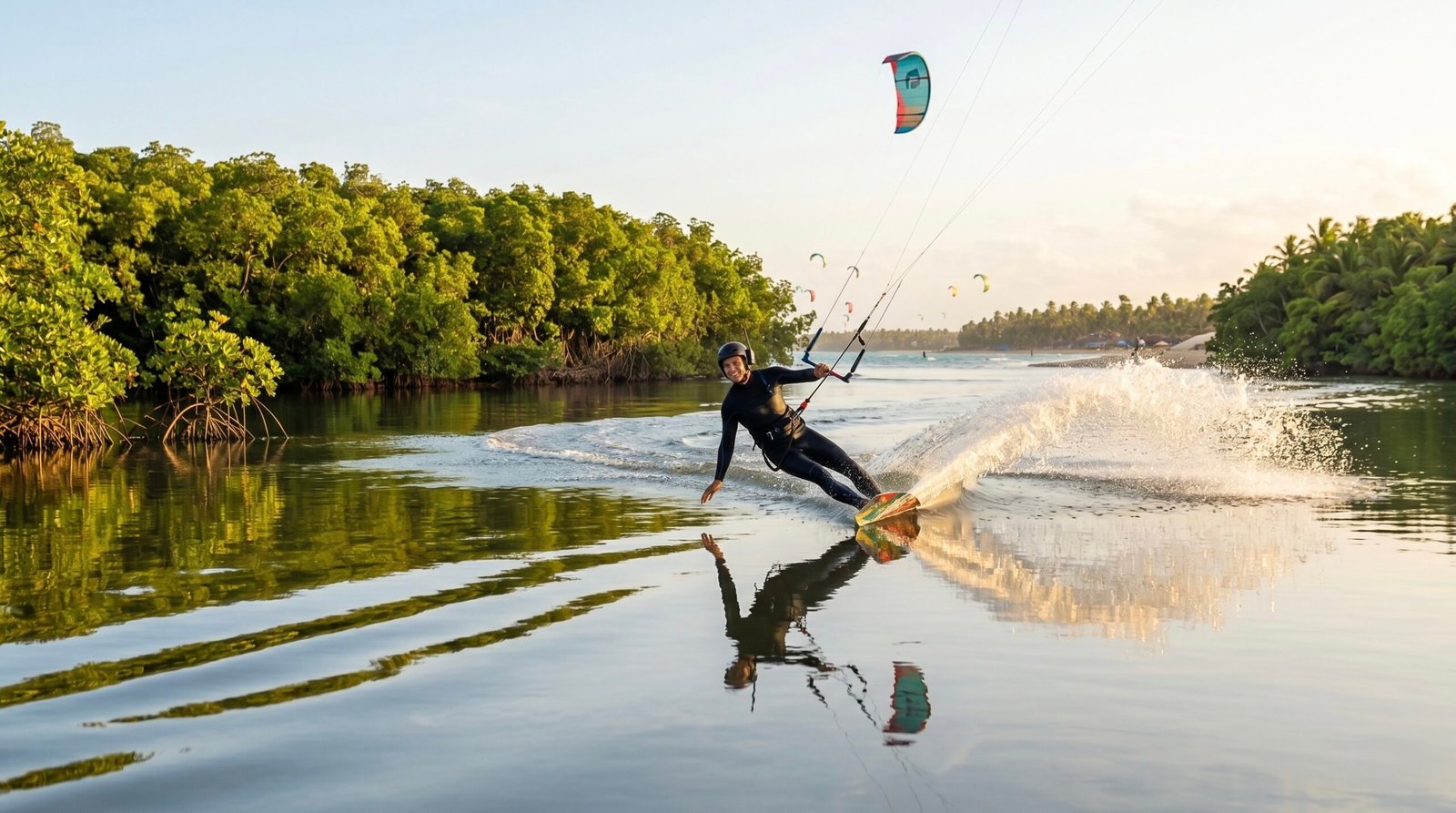
A kiter carving a smooth turn on the glass-flat waters of the Yasica River mouth at La Boca.
Cabarete's unique thermal wind, warm waters, and vibrant beach culture make it an unbeatable arena for taking your kite skills to the next level. Respect the reef, master your upwind riding, and get ready to experience the ultimate Caribbean wind paradise!
Ready to find your next spot? Explore all 15 destinations on Kitescanner — from flat-water lagoons in Morocco to the turquoise Caribbean.
Explore all spots →